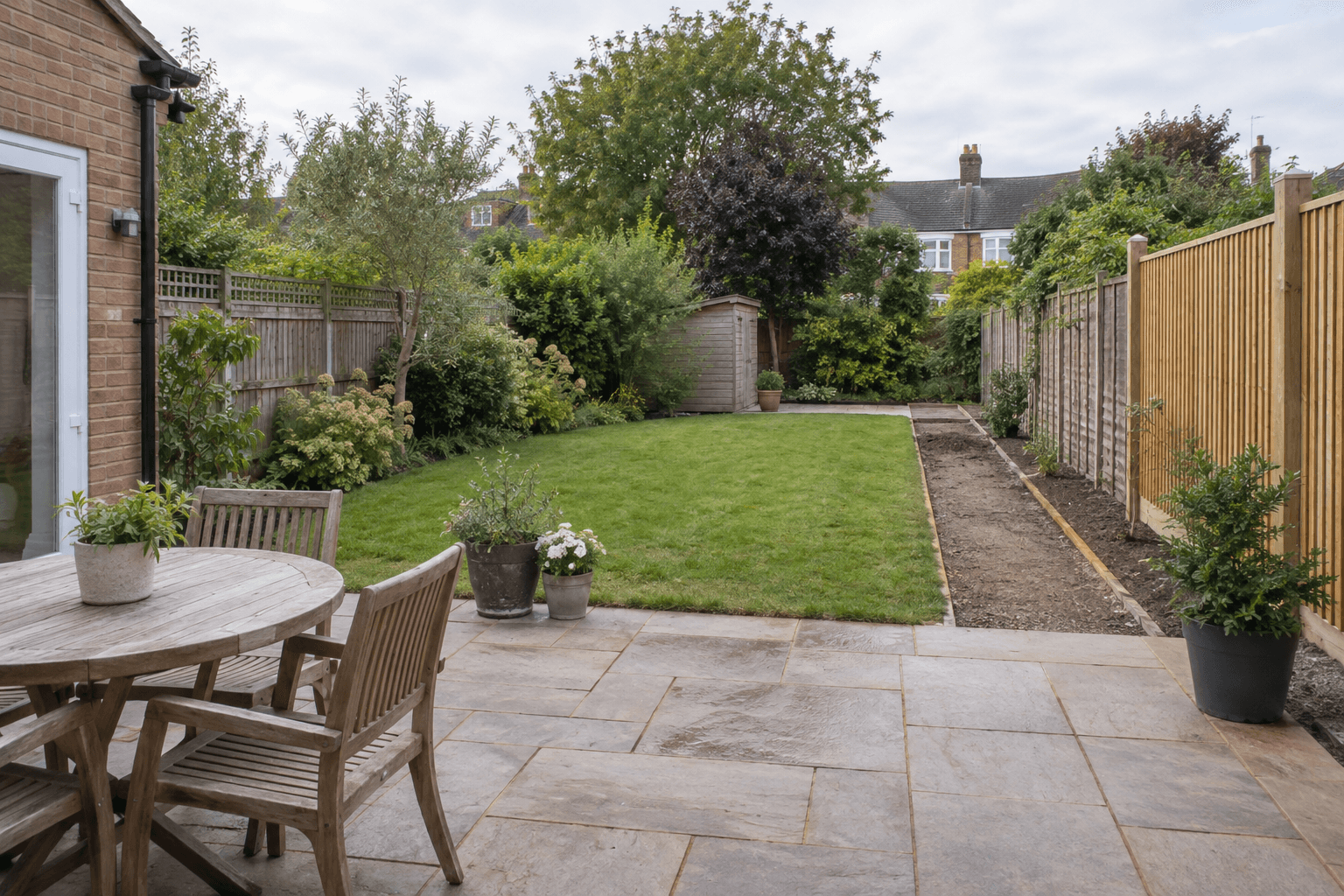
Extending a paved area creates a design question that a new patio on its own does not: what should happen where the new surface meets the part you want to keep? Trying to make the join disappear is one option. Giving it a deliberate border, or treating the extension as a distinct area, can be more convincing when the existing finish is difficult to match.
Miller Landscaping offers paving in a choice of colours, combinations and layouts across Dumfries & Galloway. Its patio service is shaped around the garden's size and how the space will be used, while its landscaping work brings lawns, hard landscaping and practical outdoor areas together. For an extension, those choices start with the relationship between the retained surface and the new space.
Decide what deserves to stay
Separate liking the old paving from knowing that it is suitable to retain. A surface can have a colour you enjoy while still needing attention. Note loose pieces, damaged edges or places that have changed level, and have their condition considered before treating the existing area as a fixed part of the design.
The visual decision follows that assessment. If the retained area is a coherent rectangle in front of the house, an extension can often be drawn as another understandable shape. If the proposed boundary zigzags around individual damaged pieces, the finished result may read as a collection of patches. Sketch the shape of what will remain, not just the square metres to be added.
Compare a real sample beside the existing surface
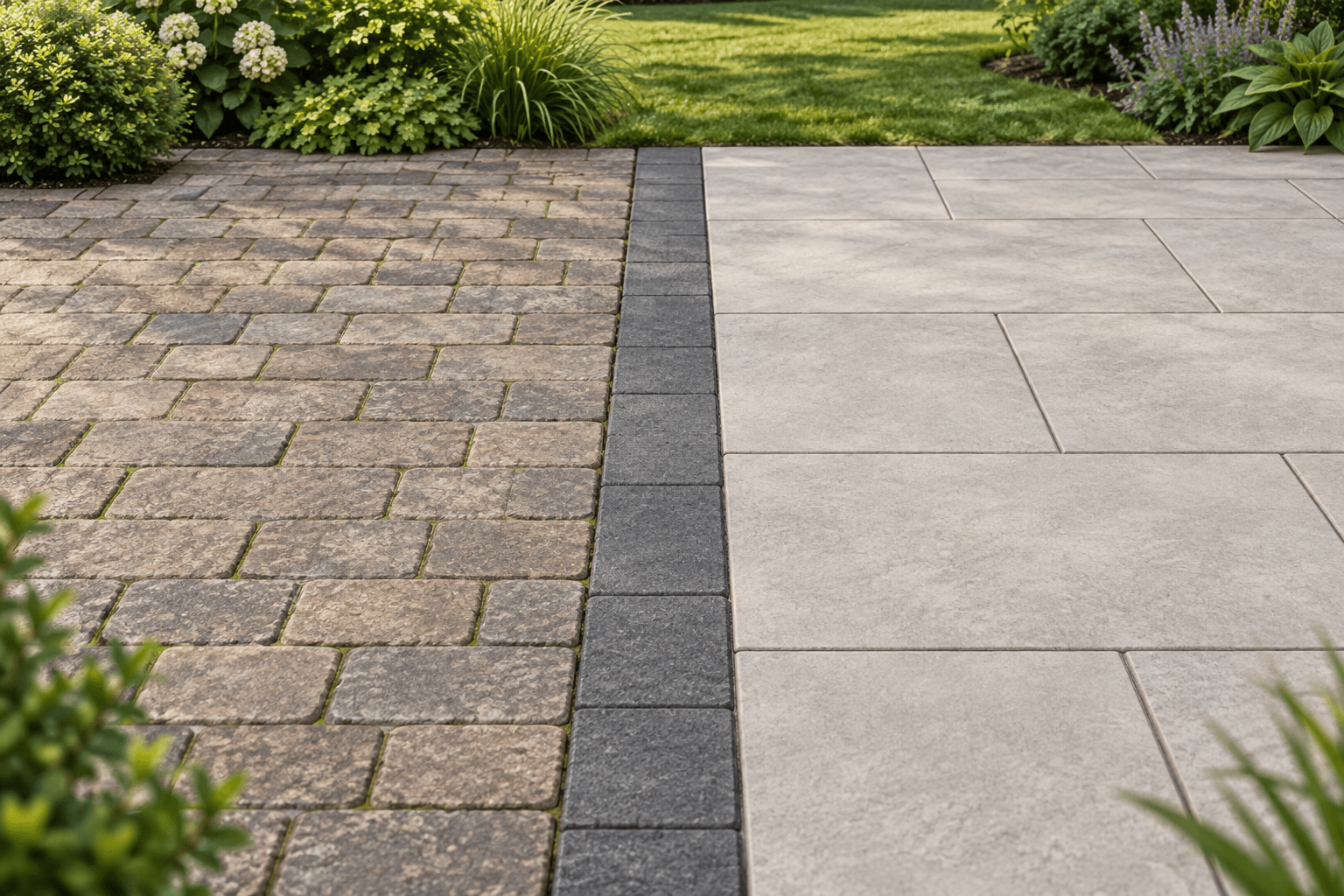
A product name or a small photograph is not enough to judge a match. Where possible, place a physical sample next to the paving you want to keep. Look at the size and edge profile as well as the colour. Two surfaces can share a grey tone but look quite different when one has small rounded pieces and the other has large, sharp-edged slabs.
View the comparison in the conditions in which you use the garden. Look from the kitchen window and from the seating area, and compare the surfaces when wet and dry. Include a representative part of the existing paving rather than its one unusually clean or shaded corner. The aim is an honest picture of the relationship, not the most flattering possible match.
If the original product is known, keep that information, but check what is actually available now. Do not assume that a familiar name settles the appearance of new material alongside a weathered surface.
Choose between three clear approaches
Continue the existing finish when the available material, dimensions and pattern sit comfortably together. This can suit an extension intended to feel like one larger space. Decide in advance whether a visible difference in age or tone is acceptable; the new area should not depend on a promise that the two finishes will eventually become identical.
Separate the finishes with a deliberate band when they are related but clearly different. A border can make the transition legible and give the new area its own edge. Consider it as part of the overall layout, including its width and direction, rather than adding a decorative strip only to disguise an awkward cut.
Create a distinct zone when the extension has a different use. A seating area can have a different paving format from the route leading to it while sharing a restrained colour palette. The change then explains how the garden works. Too many small competing areas can make the result busy, so keep the number of finishes under control.
Put the boundary where the garden makes sense
Look for a line that relates to something already readable: the end of a wall, the edge of a planting bed or the point where a route opens into a seating area. A boundary that stops for no apparent reason in the middle of the main view can draw attention to itself.
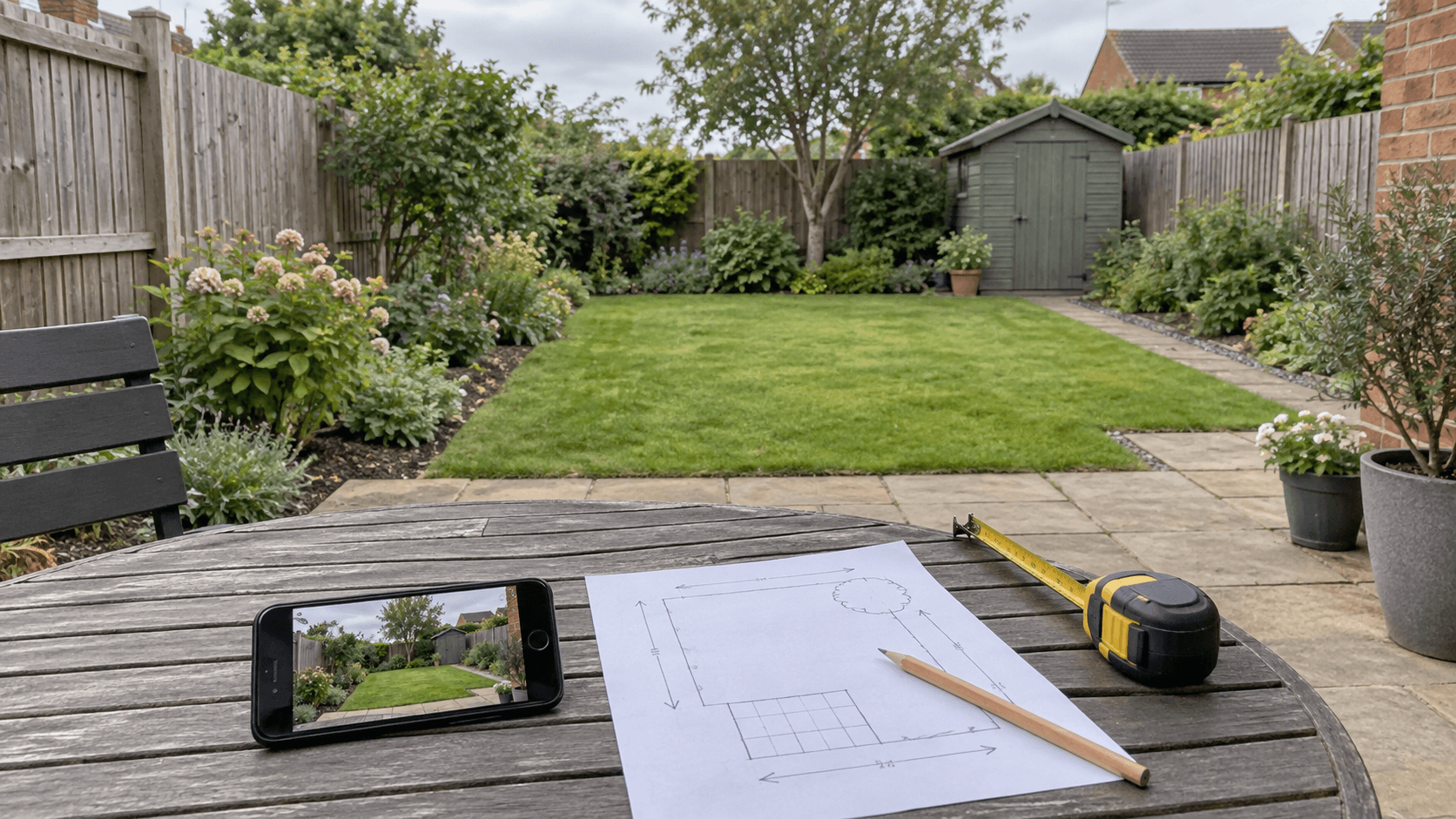
Make the line visible on a sketch, then mark it temporarily in the garden. View it from the house before judging it close up. A join that looks tidy while standing over it may divide the space awkwardly from the place where you see the garden every day.
This is a visual exercise, not a construction specification. Ground levels, drainage and the way the two areas meet still require their own assessment. A neat border does not resolve an underlying defect or make two unsuitable surfaces compatible.
Agree what the finished difference will look like
Keep a record of the sample, chosen layout and area to remain. Be clear about whether the intention is a close continuation, a visible border or a separate zone. Those are different outcomes, even if they use similar materials.
Also decide what you are not trying to disguise. An older path can retain its character beside a newer sitting area. If the age difference is acceptable, the brief becomes much clearer than asking for an invisible extension while keeping every existing piece untouched. The wider guide to paving materials and patterns can help with the finish itself; the extension needs an equally deliberate transition.
Check the join before choosing the finish
Put the retained area and the proposed extension on the same sketch before choosing a new finish. Use these checks to make the boundary a deliberate part of the layout, rather than a detail left until the materials arrive.
- Identify the condition and shape of the paving you intend to retain.
- Compare an actual sample beside a representative part of that surface.
- Check dimensions, edge shape and pattern as well as colour.
- Choose a continuation, a separating band or a clearly defined new zone.
- Mark the boundary and view it from the house and main seating position.
- Keep the visual choice separate from the assessment of levels, drainage and construction.
Questions about joining old and new paving
Should I replace everything if I cannot find an exact match?
Not automatically. First establish whether the existing area is suitable to keep. If it is, a deliberate contrast or a separate zone may make the difference look intentional. Compare those options before deciding that the entire surface must be replaced for appearance alone.
Will a dark border hide a poor match?
It can separate two finishes visually, but it does not guarantee a good result. Its position and relationship to the rest of the garden matter. Test the combination with samples and a marked boundary, and avoid using a border as a substitute for assessing the retained paving.